Neurodegeneration is one of the Four Horsemen of chronic disease and one where modern medicine still has very few tools once the process begins. Over time, neurodegeneration chips away at memory, language, and problem-solving—eventually crossing the threshold into a clinical diagnosis of dementia. As our lifespans extend, so too has dementia’s reach: up to 152 million people around the globe are projected to be living with the disease by 2050.1
Identifying modifiable levers that meaningfully reduce dementia risk, particularly at the population level, is one of the most important problems in medicine.
Research in the last decade has highlighted sensory impairment as a major risk factor for developing dementia. This work has primarily leveraged epidemiological studies—which help us find associations that predict risk, but lack the controlled experimentation that allows us to draw definitive causal connections. These studies have largely focused on hearing, consistently finding a clear association—hearing impairment is correlated with an elevated risk of developing dementia. A widely-cited meta-analysis published in the Journal of the American Medical Association (JAMA) found that hearing loss is associated with a near-doubling of the risk of eventual dementia diagnosis (Risk Ratio = 1.94, 95% CI: 1.38-2.73).2
Despite being incredibly common as we age, vision impairment has received significantly less attention for its potential role in dementia outcomes. Interest here is beginning to increase, and in 2024, a report from the Lancet Commission added vision loss to its list of potential risk factors for dementia development.3 Their meta-analysis found a nearly 50% increased risk of dementia in participants with vision impairment (RR = 1.47, 95% CI: 1.36–1.60)—suggesting vision may indeed be a risk factor we can meaningfully tune towards healthy brain aging.
Correcting for vision loss
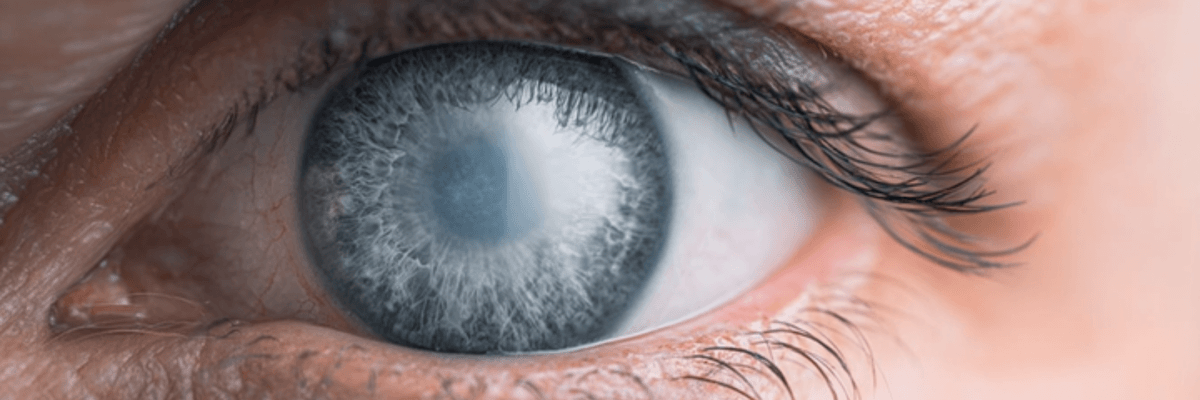
The lens is a key structure in our visual system that can degrade during aging or illness. It is a clear, flexible structure located behind the iris and pupil, connected to muscles that continuously make tiny adjustments to its shape. The shape of the lens focuses light onto the retina, located at the back of the eye, and light hitting the retina is then translated into the visual information that our brains use to see the world.
With age, both the lens and its supporting muscles lose their adjustability, making it difficult to focus our vision at certain distances. Eye glasses and contact lenses correct for this, focusing light before it ever reaches the eye’s internal lens, effectively compensating for the reduced flexibility.
Other changes to the lens, however, cannot be corrected by glasses or contacts. In the case of cataracts, the lens itself becomes cloudy or damaged, blocking and refracting light en route to the retina.
Cataracts are far more common than most people realize: over half of Americans over age 80 have cataracts or have already had them surgically removed.4 Because clouding of the lens occurs gradually, it can be easy to miss the slow degeneration of vision over time. Fortunately, optometrists can easily detect even the early stages of cataracts during routine eye exams. And modern medicine has made replacing the lens—thus restoring a clear path to the retina—an extremely straightforward procedure.
Vision impairment is associated with increased dementia risk, and cataracts—one of its most common causes—are readily correctable. The key question is straightforward: if vision loss increases risk, does restoring vision reverse it?
Our research team spends hundreds of hours each month vetting studies and distilling dense literature to deliver evidence-informed insights on health and longevity. If you find value in our work, consider becoming a premium member and supporting our mission.












The study
To tackle this topic, we’re going to focus on how a recent meta-analysis5 quantitatively asked two key questions:
- Is cataract surgery associated with the risk of dementia when compared to people with uncorrected cataracts?
- Is cataract surgery associated with the risk of dementia when compared to the population without cataracts?
The authors of this meta-analysis used 6 studies spanning over 240,000 participants for the first question, as well as 3 studies with over 300,000 participants for the second. The studies analyzed in this meta-analysis were primarily epidemiological—participants were not randomized or assigned to groups, but chose to receive cataract surgery or not. This means we can find associations, but we cannot make strict claims about causality.
Cataract surgery normalizes risk of dementia
Towards the first question, comparing risk between people with diagnosed cataracts who either did or did not undergo corrective surgery, the effect observed was similar regardless of the criteria used. In three studies, cognitive impairment was determined by cutoffs on cognitive test scores, with risk reductions ranging from 21–36% in those who underwent cataract surgery. In three others, the end point was diagnosis of dementia by a clinician, finding risk reductions of 24-37%.
Regardless of how cognitive decline was measured, the pattern was the same: Among people with cataracts, those who underwent surgery consistently showed lower rates of cognitive decline. Grouping all 6 studies together, those who underwent cataract corrective surgery were 25% less likely to develop cognitive impairment or dementia over 7.8 to 10 year follow up periods (Hazard Ratio = 0.75, 95% CI: 0.72–0.78).
While this reduction in risk is great news on its own, the natural follow up is how this risk compares to people who never develop cataracts in the first place. The authors then looked to the general aging population that, at the time of study, had never developed cataracts. Comparing the population without cataracts to patients with cataracts who had corrective surgery, no statistically significant difference was observed in risk of cognitive decline in follow ups ranging from 2 to 8.5 years (HR = 0.84, 95% CI: 0.66-1.06).
Eyeing it together
We have two complementary points: corrective cataract surgery is associated with a reduction in risk of developing dementia compared to untreated cataracts, and dementia risk following corrective cataract surgery is comparable to people with no cataract diagnoses.
This second point is important, in part because it helps us rule out aspects of shared causality. Metabolic disorders, smoking, and cardiorespiratory fitness are all risk factors for developing cataracts. They are also, as we’ve discussed elsewhere, risk factors for developing dementia.
When patients with cataracts who undergo surgery have the same dementia risk as those who never develop cataracts, it strengthens the inference that sensory loss itself is contributing to risk—rather than a shared underlying factor driving both conditions.
Cataract surgery doesn’t seem to change any fundamental feature of our biology that should impact overall dementia risk—its function is to simply enable more light to pass through the eye and reach the retina. These data should be reassuring for the 50% of people who will develop cataracts: Uncorrected cataracts may increase dementia risk, but risk after corrective surgery is no different than the baseline population. In other words, developing cataracts isn’t the risk—the risk is in leaving them untreated.
Protecting the senses, protecting the brain
There are two categories of hypotheses that dominate thinking on why sensory loss elevates dementia risk. The first set of hypotheses revolve around cognitive resource depletion: Navigating the world with impaired senses imposes constant cognitive strain, as the brain has to dedicate more effort to make sense of constrained sensory input. Daily difficulties in navigating the world can simultaneously impede engagement with behaviors that buffer against cognitive decline—like exercise, socializing, and mental stimulation.3
If this resource-straining hypothesis were true, we would expect rather rapid improvement in cognition once sensory function was restored—if strain arises from a surplus of cognitive resources being shuttled towards understanding the impaired senses, alleviating sensory impairment should free the brain to dedicate attention to other tasks. To test this, the meta-analysis also looked at 8 studies analyzing cognitive testing scores taken before and 2–12 months after cataract surgery. Here they found a small but statistically significant improvement in cognitive scores following surgery relative to baseline (RR = 0.96, 95% CI: 0.94-0.99). This short time scale supports the idea that cognitive reserves were being depleted when vision was limited, which then rapidly returned when vision was restored.
That said, while statistically significant, it’s tough to emphatically argue that a 4% difference in cognitive scores is biologically meaningful enough to drive dementia outcomes alone. What these data do tell us is that sensory impairment acutely strains daily cognitive capacity. What they can’t tell us is how much time patients spent engaging in healthy behaviors—which may matter most for long-term risk in this resource-draining framework.
We also have a second set of hypotheses for sensory impairment’s contribution to long term dementia risk, derived from basic neurobiology. We know the brain generally operates on a “use it or lose it” principle. During development, circuits with limited ongoing activity will lose connectivity, then vitality. “Neurons that fire together wire together,” and underactive connections or even entire cells are selectively removed.
In younger brains, robust repair mechanisms keep this in check. But, in aging brains, inactivity could cascade—local inactivity begets cell atrophy, atrophy begets cell death and inflammation, and inflammation in turn fuels further local atrophy. This may begin a forward-feeding loop of neurodegeneration, with inactivity from a sensory input leading to cascading damage throughout neighboring brain regions, expediting the neurodegenerative process.
Realistically, each of these mechanisms could be at work simultaneously. Cognitive strain and decreased healthy behaviors, as well as inactivity-driven regional brain atrophy, likely all work in tandem to accelerate age-related neurodegeneration. How they interact in reality is not yet fully understood—and whatever that answer may be, it won’t change what we know we can do now.
Vision loss—a modifiable risk factor for dementia?
Vision loss tends to happen gradually—we don’t wake up one day with rigid lenses that were perfect the day before, or cataracts completely obstructing what was yesterday a crystal clear view. Despite how important vision is for everyday function, impairment can develop so slowly we may fail to notice how strained our sight has become. As such, regular eye exams are an important, effective, and frankly simple strategy to maximize quality of life. And for cataracts specifically, the solution is more straightforward and routine than most people expect.
Cataract surgery is extremely common, takes only about an hour, and is done without general anaesthesia. It involves removing the damaged, cloudy lens from inside the eye and inserting a new one, so it physically replaces the core problem leading to vision loss in this condition. Complications are rare, and most people see a full return to activity by 8 weeks.
This meta-analysis finds a clear association between vision restoration and reduced long-term dementia risk. This is a vote in favor of cataract surgery, and potentially vision restoration writ large, in protecting against dementia. As studies used in this meta-analysis became available, the National Institute on Aging highlighted that “one of the top preventive actions that may reduce risk for Alzheimer’s and related dementias is getting vision problems corrected, through methods such as eye exams, eyeglasses, and cataract surgery.”6
That said, the epidemiological effect has not yet fully replicated in randomized controlled trials (RCTs). For hearing, this included a landmark RCT comparing dementia risk in patients with hearing impairment with or without hearing aid interventions, which found no difference in its primary endpoint when all patients were analyzed over a three year period (discussed at length in a previous newsletter). However, in that original trial, patients enrolled in one cohort were older and had more comorbidities—increasing their risk of cognitive decline—and, specifically in this higher risk cohort, secondary analysis showed statistically significant protection against cognitive decline from hearing aids. As a result, a follow-up analysis of this trial stratified participants from both cohorts by their predicted risk of cognitive decline.7 For patients in the highest quartile of pre-existing risk factors, this analysis shows a 66% reduction in the rate of cognitive decline over 3 years as a result of hearing aid use.
Negative data within controlled trials—including one small RCT in which cataract surgery showed no cognitive benefit at three months8—may give us reason to pause at drawing a definitive connection between sensory intervention and dementia risk for all patients. In high risk patients, we have causal evidence that hearing aids reduce the rate of cognitive decline. But there are populations where no clear benefit was observed.
That said, it is worth noting a shared shortcoming of these RCTs: the timescales are extraordinarily brief for investigating long-term disease. Neurodegeneration can take many years, even decades, to actualize as cognitive impairment or dementia. Existing trial windows could simply be too brief to see real effects. In high risk patients, three year studies are long enough to see protection. It is likely that, in low-to-moderate risk patients, protective effects just take longer to accumulate.
Still, as we wait for longer term data from RCTs, the epidemiological data are particularly strong, and the fact that two different senses show the same direction of effect is promising. There are multiple plausible cognitive and biological mechanisms that could explain why sensory impairment would drive neurodegenerative disease. The convergence of epidemiological data across two senses, supported by RCT evidence in high-risk patients, is not easy to ignore.
Causality isn’t fully established across all populations, but the asymmetry is clear: the downside of acting is low, and the potential upside—preserving cognitive function—is enormous. And for those of us not requiring external aid for our senses, these data offer all the more reason to protect our hearing and vision proactively. The emerging evidence suggests a simple principle: protecting the senses may be one of the most practical ways to protect the brain.
For a list of all previous weekly emails, click here.
References
- GBD 2019 Dementia Forecasting Collaborators. Estimation of the global prevalence of dementia in 2019 and forecasted prevalence in 2050: an analysis for the Global Burden of Disease Study 2019. Lancet Public Health. 2022;7(2):e105-e125. doi:10.1016/S2468-2667(21)00249-8
- Lee M, Whitsel E, Avery C, et al. Variation in population attributable fraction of dementia associated with potentially modifiable risk factors by race and ethnicity in the US. JAMA Netw Open. 2022;5(7):e2219672. doi:10.1001/jamanetworkopen.2022.19672
- Livingston G, Huntley J, Liu KY, et al. Dementia prevention, intervention, and care: 2024 report of the Lancet standing Commission. Lancet. 2024;404(10452):572-628. doi:10.1016/S0140-6736(24)01296-0
- National Eye Institute. Accessed February 25, 2026. https://www.nei.nih.gov/eye-health-information/eye-conditions-and-diseases/cataracts
- Yeo BSY, Ong RYX, Ganasekar P, Tan BKJ, Seow DCC, Tsai ASH. Cataract surgery and cognitive benefits in the older person: A Systematic Review and meta-analysis. Ophthalmology. 2024;131(8):975-984. doi:10.1016/j.ophtha.2024.02.003
- Vision impairment is associated with as many as 100,000 U.S. dementia cases. National Institute on Aging. Accessed March 9, 2026. https://www.nia.nih.gov/news/vision-impairment-associated-many-100000-u-s-dementia-cases
- Pike JR, Huang AR, Reed NS, et al. Cognitive benefits of hearing intervention vary by risk of cognitive decline: A secondary analysis of the ACHIEVE trial. Alzheimers Dement. 2025;21(5):e70156. doi:10.1002/alz.70156
- Anstey KJ, Lord SR, Hennessy M, Mitchell P, Mill K, von Sanden C. The effect of cataract surgery on neuropsychological test performance: a randomized controlled trial. J Int Neuropsychol Soc. 2006;12(5):632-639. doi:10.1017/S1355617706060954