Over the last couple of weeks, if you read the headlines, you might have concluded that a promising candidate for multi-cancer early detection is dead. The New York Times ran a story under the framing that GRAIL’s Galleri test had “failed” in a major study.1 Other news sources followed suit and GRAIL’s stock dropped roughly 50% overnight. The message, by all appearances, was clear: the test doesn’t work, the science was overhyped, move along.
I don’t think that’s the right read. Or at least, I don’t think it’s the complete read. And I want to walk through why, because the details here matter a great deal—not just for Galleri, but for how we think about cancer screening and screening trials more broadly.
What is Galleri?
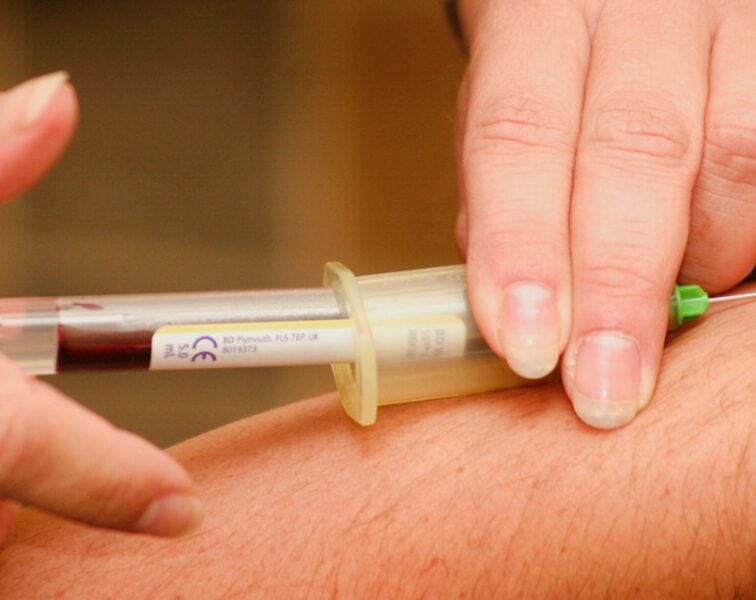
For those unfamiliar, Galleri is a blood-based multi-cancer early detection test developed by GRAIL. From a single blood draw, the test analyzes cell-free DNA—fragments of genetic material that tumors shed into the bloodstream—using a technique called targeted methylation sequencing. Rather than looking for a specific mutation, it reads chemical modification patterns on the DNA that differ between cancerous and non-cancerous tissue, screening for signals associated with more than 50 cancer types. When a signal is detected, the test also predicts the likely organ of origin, which is intended to guide a more efficient diagnostic workup rather than leaving physicians to search blindly.
Galleri has been commercially available in the United States since 2021 at a list price of $949. It is not yet FDA-approved, though GRAIL submitted its premarket approval application in January 2026. Because it is highly unlikely insurance will cover the test, most people pay out of pocket. Despite that, GRAIL has sold nearly half a million tests as of January 2026, according to the company.2
Whether a test like this ultimately earns a place in routine care, however, depends less on technological sophistication or commercial uptake and more on clinical outcomes. The most important question is simple: does using Galleri actually improve cancer detection in a way that meaningfully reduces cancer mortality? The NHS-Galleri trial, conducted through England’s National Health Service (NHS), was designed to begin answering that.
Our research team spends hundreds of hours each month vetting studies and distilling dense literature to deliver evidence-informed insights on health and longevity. If you find value in our work, consider becoming a premium member and supporting our mission.










Galleri on trial
The gold standard question for any cancer screening test is straightforward: does it save lives? But answering that question directly—through cancer-specific mortality—requires a study of extraordinary scale and duration. You would likely need hundreds of thousands of participants and a decade or more of follow-up. That kind of trial is not just expensive; it is nearly impractical for a single company to conduct.
To make a trial more feasible, the NHS-Galleri trial chose a proxy for mortality. Instead of waiting ten years for mortality data, the researchers asked—in approximately 142,000 adults aged 50 to 77—whether annual screening with Galleri could reduce the number of people diagnosed with late-stage cancer compared to standard screening alone. Specifically, the primary endpoint was a composite—a reduction in combined Stage III and Stage IV cancer diagnoses. The logic goes that a meaningful shift in diagnosis toward earlier-stage disease should eventually lead to improved survival.
As the headlines point out, the NHS-Galleri trial failed to meet this primary endpoint.3 At first glance, these results may seem to point toward the test being dead on arrival, but let us consider the full context of what we know.
First, these data were disclosed via a corporate press release, not through a peer-reviewed publication or formal scientific presentation. As such, the full dataset has not yet been presented publicly. GRAIL has stated that detailed results will be submitted for presentation at the American Society of Clinical Oncology annual meeting later this year, in late May to early June. That means everything you have read so far—every headline, every expert quote, every hot take—is based on a summary in a press release. We are all interpreting incomplete data.
However, even within this incomplete dataset, there is some signal of benefit. Across a prespecified group of 12 deadly cancer types—specifically anus, bladder, colorectal, esophagus, head and neck, liver/bile duct, lung, lymphoma, myeloma/plasma cell neoplasm, ovary, pancreas, and stomach—there appears to have been a meaningful reduction in Stage IV diagnoses specifically. GRAIL reported that Stage IV cancers decreased with each year of sequential screening, with a greater than 20 percent reduction in the second and third rounds. There was also, according to the press release, a substantial increase in Stage I and Stage II cancers detected in the intervention arm, and a four-fold higher overall cancer detection rate compared to standard of care alone.
In other words, the composite endpoint masked a potentially important signal within one of its components. If Stage IV reduction alone had been the pre-specified primary endpoint, the interpretation of this trial—and the ensuing coverage—may have looked quite different. Increased Stage I and II diagnoses may still be saving lives if it means those cancers never reach Stages III and IV. That does not mean GRAIL should have chosen a different endpoint after the fact; that’s not how clinical trials work. But it does mean there is a significant gap between “the trial missed its primary endpoint” and “this test is dead.”
So why did the coverage read like an obituary?
The cancer screening debate
Some of the loudest voices in the coverage of these results come from a well-established camp within medicine that is broadly skeptical of cancer screening beyond conservative guidelines.
To be fair, their arguments are not irrational. There are legitimate concerns about false positives, overdiagnosis, anxiety, and unnecessary downstream intervention. As such, this camp tends to demand a very high evidentiary bar—often full mortality data—before endorsing any screening intervention. When determining guidelines at a population level, this skepticism may be warranted.
But the calculus of harm versus benefit can look very different at the individual level. Population-level guidelines are designed to optimize outcomes across millions of people, inclusive of cost, and by necessity they weigh aggregate harms against aggregate benefits. That is not the same calculation a single person makes when deciding what screening is right for them. Individual risk factors, family history, risk tolerance, and personal values all enter that equation—and a test that may not yet meet the bar for a population-wide recommendation can still be a reasonable choice for an informed individual.
There is also a more fundamental problem. For cancers like pancreatic, ovarian, and liver, there are currently no routine screening tests at all. The vast majority of these diagnoses occur at Stage IV, when treatment options are limited and prognosis is grim. When the alternative is no early detection whatsoever, even a modestly effective test—one that shifts a fraction of these diagnoses from Stage IV to Stage II or III—would represent a meaningful advance at the population level.
That said, let’s not let the pendulum swing too far in the other direction either. I want to be direct about what we cannot say right now. We do not have the actual numbers. We do not know the magnitude of the Stage IV reduction or the width of the confidence intervals. We do not know the breakdown by cancer type or how the results evolved across the three screening rounds. We do not know the false positive rate or the clinical consequences of false positives in this population. We do not have peer-reviewed analysis. All of that is pending and, until it is available, we must wait before making strong conclusions in either direction.
What we are encountering in many of these headlines reflects a particular interpretive framework, not a settled verdict. The skeptics are not wrong to ask hard questions. But dismissing the trial outright on the basis of a missed composite endpoint—before the full data have even been presented—is not skepticism. It’s premature.
The bigger picture
It is also worth stepping back from this single trial. The Galleri test, in its current form, is not the final word on multi-cancer early detection. It represents one generation of a rapidly evolving technology. Early iterations of nearly any diagnostic platform are imperfect. The first mammograms were far less sensitive and specific than the ones we use today, but they paved the way for the increasingly powerful and accessible technologies that are now commonplace. It is entirely plausible that this version of the technology would be insufficient to demonstrate population-level mortality reduction, while a version two, three, or five years from now performs materially better.
The structural challenge will remain the same regardless of the technology: proving mortality reduction through a randomized controlled trial is likely impractical for most of these tests. That means the field will probably have to rely on proxy endpoints—principally stage shift, and especially reductions in Stage IV disease—to build the evidence base. That introduces real complexity and legitimate debate about what constitutes adequate evidence. Those are debates worth having openly and honestly, not debates to be resolved with reductive headlines.
Our position
I have no financial relationship with GRAIL or any other liquid biopsy company. I have no incentive to outright defend this test. Rather, my interest is in what actually works to reduce cancer risk and mortality. From that vantage point, what I see here is a trial that did not meet its composite primary endpoint, that may contain a clinically meaningful signal within Stage IV disease, and whose full data have not yet been presented. I also see a media environment that processed this story in roughly 48 hours, amplifying the most pessimistic interpretation alone while largely ignoring the structural limitations of what was actually disclosed.
The responsible position is to wait for the full data, evaluate them rigorously, and resist the temptation to declare either victory or defeat on the basis of a press release. This trial did not deliver the clean, unambiguous win the field was hoping for. But the obituaries are premature. The GRAIL Galleri test is not dead. Nor has it proved itself yet.
For a list of all previous weekly emails, click here.
References
- Robbins R, Kolata G. Grail’s Cancer Detection Test Fails in Major Study. The New York Times. https://www.nytimes.com/2026/02/20/health/cancer-detection-test-grail.html.February 20, 2026. Accessed February 27, 2026.
- GRAIL, Inc. Presented at: 44th Annual J.P. Morgan Healthcare Conference; 2026. https://investors.grail.com/static-files/1b711316-2e6a-4786-b27d-e5d63e1c7bfd
- February. Landmark NHS-Galleri Trial Demonstrates a Substantial Reduction in Stage IV Cancer Diagnoses, Increased Stage I and II Detection of Deadly Cancers, and Four-Fold Higher Cancer Detection Rate. GRAIL. February 19, 2026. Accessed February 27, 2026. https://grail.com/press-releases/landmark-nhs-galleri-trial-demonstrates-a-substantial-reduction-in-stage-iv-cancer-diagnoses-increased-stage-i-and-ii-detection-of-deadly-cancers-and-four-fold-higher-cancer-detection-rate/